Summary
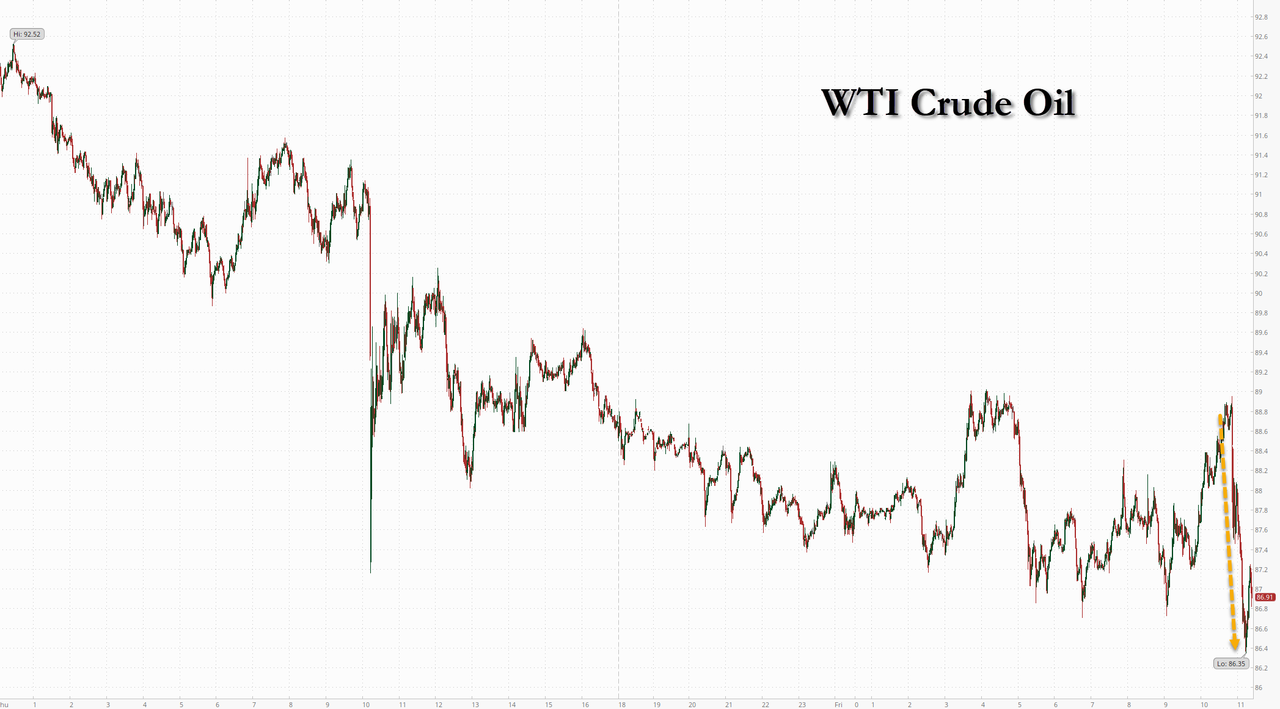
- Trump repeats conditions on Iran for lifting US naval blockade, oil pushed lower. Fars responds: "Mix of truth & lies."
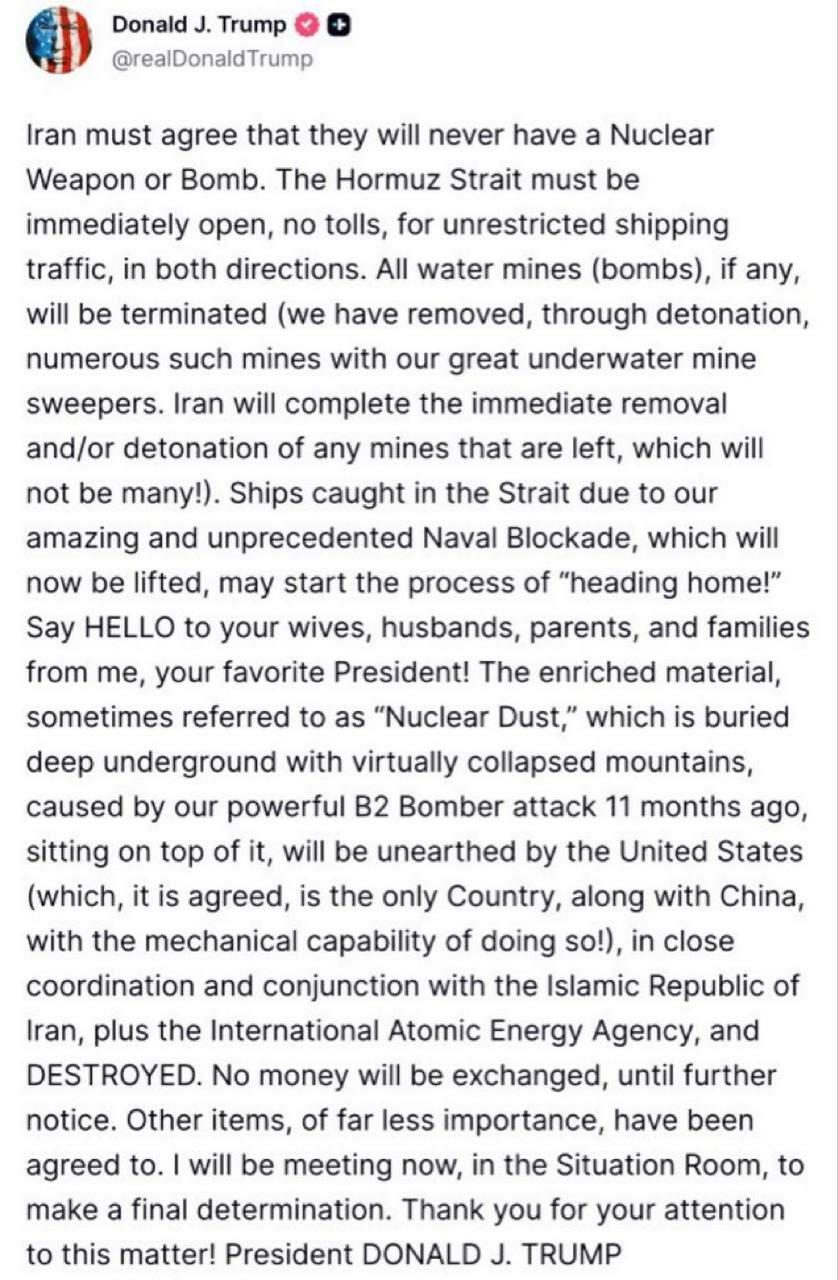
- Trump vows to 'unearth' and gain control of nuclear dust in 'cooperation' with Iran and/or China, says no money will be exchanged with Iran, and that it 'must agree' to never have a nuclear weapon (Truth Social).
- NY Times reports surprising element of the Iran peace draft deal: a proposed investment fund for Iran - reportedly $300 billion.
- Tehran confirms MOU stalled, but is being reviewed, amid lack of trust in negotiating with Washington.
- The Revolutionary Guards said any renewed conflict would spread “far beyond the region,” threatening “crushing blows” and “utter ruin” in places opponents “cannot even imagine.”
* * *
Trump: Iran's Uranium will be unearthed by the United States; Fars: Trump's claims "mix of truth and lies"
These Truth Social messages are starting to appear uncannily similar to ones already issued weeks ago. But this seems more confirmation that there is no MOU which has been 'finalized' - but that some key things have been agreed to.
- Trump is again saying the US will get the 'nuclear dust'
- Iran "must agree" to never have a nuclear weapon
- No toll system for Hormuz
- Removal of all sea mines
- "No money will be exchanges until further notice."
Oil pushed lower on the headlines via Trump's post...
Seems Trump is going to say "yes" to the Iran deal
— Amichai Stein (@AmichaiStein1) May 29, 2026
But amid the return to some 'optimism' in headlines, there are the usual caveats and counternarratives (likely accurate):
This is what an Iranian official told me late last night, anticipating that Trump would be making such an announcement like the one he just made on Truth Social. Iran has also warned Trump would likely mischaracterize the privately agreed terms to promote his “victor” narrative. https://t.co/1JOvSGHrEM
— jeremy scahill (@jeremyscahill) May 29, 2026
Iran Clarifies Deal 'Not Finalized' Amid Lack Of Trust
Iran's Tasnim reports Friday that the US-Iran Memorandum of Understanding (MOU) is not yet finalized, and that Thursday's flurry of Western media headlines about an agreement finally being reached were inaccurate.
"The text is not finalized yet and the account in Western media is not precise," a fresh statement indicates. Official confirmation will be announced if it does get to the point of being finalized, Tasnim notes. The report cited an Iranian official to say that "the text of the possible memorandum of understanding has had changes over the past few days."
The warring sides are attempting to lock in a 60-day extended ceasefire, during which time they will get back to the table - and that's when finer details like how to address Iran's stockpile of highly enriched uranium will be dealt with. It is now day 91, and according to the latest Friday:
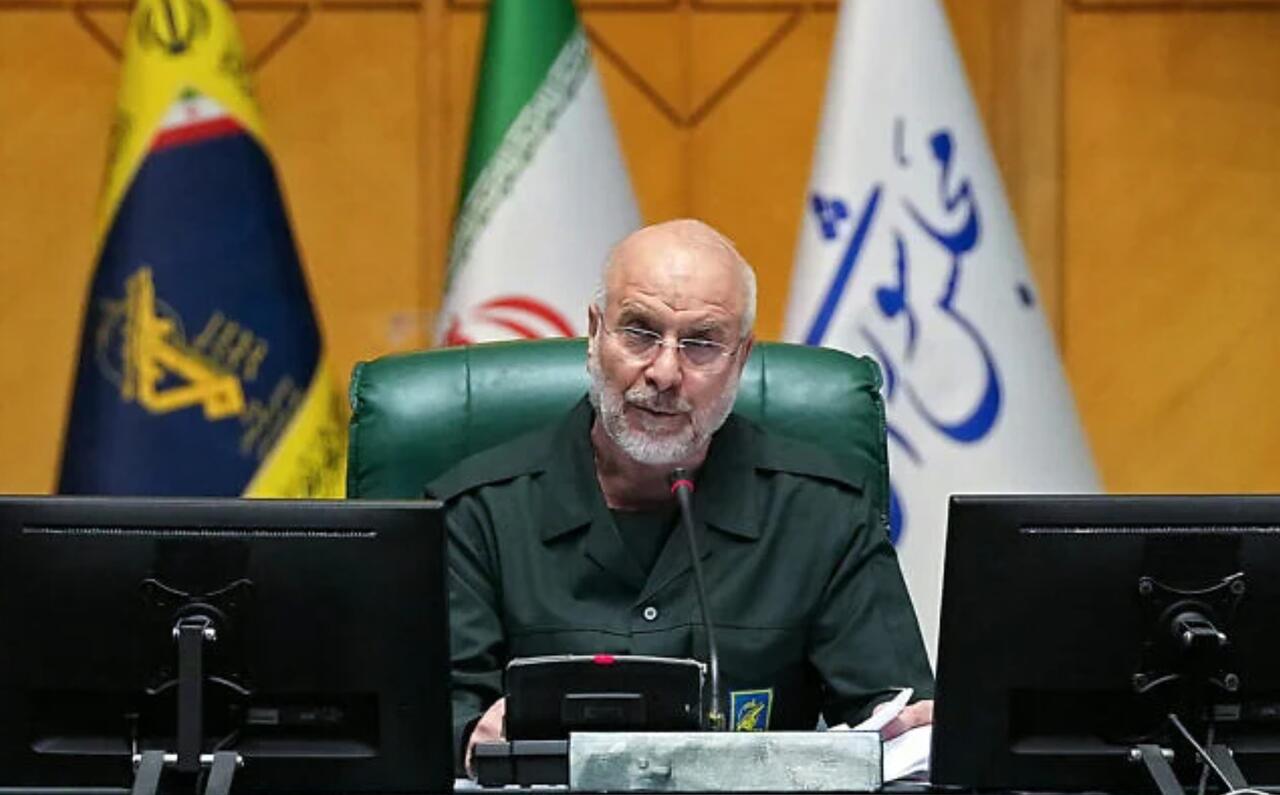
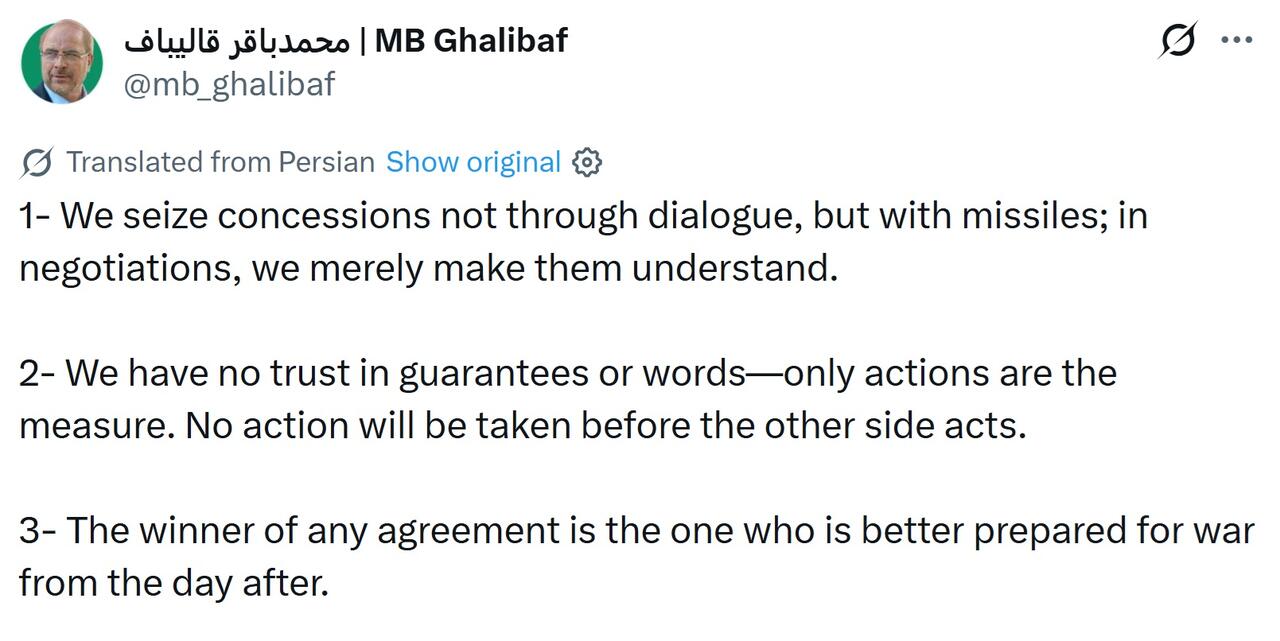
Iranian Parliament Speaker and top negotiator Ghalibaf says: "We have no trust in guarantees or words."
Late Thursday, US Vice President J.D. Vance indicated that President Trump has not approved, at a moment Washington is insisting the nuclear issue be more front and center as part of the MOU.
However, the Iranians have consistently said their nuclear program is not up for negotiation toward ending the war - but that it is something that can be talked about once the conflict closes.
According to a summary of the latest on the stalled MOU from an Al Jazeera correspondent:
Diplomatic efforts to preserve the ceasefire between the United States and Iran have continued behind the scenes, with officials signaling progress towards a framework that could open the door to formal negotiations after weeks of conflict and disruption across the Gulf and beyond.
Despite the optimism, questions remain over the timing and scope of any agreement.
Iranian media reports suggested discussions are continuing and that key details have yet to be finalized, while both sides continue to navigate sensitive issues, including Iran’s nuclear program and security in the Gulf.
Ghalibaf: We Achieved Concessions Through Missiles, Not Dialogue
More from Iran's chief negotiator in a Friday update:
What has become clear is that US and international media reports have consistently proven premature, too out front, thinly sourced, and ultimately inaccurate in their generally optimistic claims of a deal being 'finalized' or else 'imminent'.
Iran Threatens 'Utter Ruin' on US-Gulf-Israel if War Resumes
In the meantime, Iran's ongoing threats of an escalated, protracted war happen to be very clear:
The Revolutionary Guards said any renewed conflict would spread “far beyond the region,” threatening “crushing blows” and “utter ruin” in places opponents “cannot even imagine.”
The warnings come after a war that saw Iran target US bases, Israeli cities and critical infrastructure in Gulf Arab states, while effectively shutting shipping through the Strait of Hormuz and triggering a global energy shock.
The Islamic Republic has also been touting new "tools" to use against its enemies, per CNN:
Last week, Iranian Foreign Minister Abbas Araghchi warned that any future retaliation would “feature many more surprises,” while Iran’s military threatened to open “new fronts” using “new tools.” Mohammad Bagher Ghalibaf, Iran’s top negotiator, said the armed forces had used the ceasefire period to rebuild their capabilities “at the highest level.”
Some pundits fear that such references to "new fronts" could mean either the closure of the Bab al-Mandeb Strait in the Red Sea, or even the possibility of missiles reaching Europe.
Umud Shokri, an energy strategist at George Mason University, has explained in a statement, "A simultaneous crisis in Bab al-Mandeb and the Strait of Hormuz would be far more serious, potentially affecting both Red Sea trade and Persian Gulf energy flows, which would raise oil prices, freight rates, and inflationary pressure worldwide."
One of the newest and most surprising elements of the Iran peace draft deal is a proposed investment fund for Iran — reportedly $300 billion.
— Clash Report (@clashreport) May 29, 2026
Iran originally framed this as reparations for war damage (which it estimates at $300B–$1T). The U.S. side is rebranding it as an… pic.twitter.com/zdrgCiacfH
Still, the Trump administration is pressing for a deal which would make its Iran gambit look like 'victory' - something which finally reopens energy transit points and sees the removal of highly enriched uranium from Iran. Tehran leaders, however, don't appear in the mood to allow Washington to have its cake and eat it too.
More Latest Headlines
More latest Iran developments via Newsquawk:
- Many points regarding the Iranian nuclear file have been resolved; Iran has agreed to international oversight of its nuclear facilities to prevent their dismantling, Al Arabiya reported citing sources. Iran wants to transfer the enriched uranium to China with a commitment not to deliver it to America.
- Chairman of the Iranian National Security Committee of the Iranian Parliament said there are no plans to transfer enriched uranium out of the country, Asharq reported.
- Iran Deputy for Foreign Policy and International Security Ali Baqeri held separate meetings in Moscow with the Foreign Policy Advisor to Brazil's President and the Secretary General of Egypt's National Security Council.
- IRGC Commander said Iran forces are ready to act on Supreme Leader's order and enemies should not make mistakes as they will get themselves and others into trouble.
- Iran military source said US drone was intercepted near Bushehr in southern Iran, according to Al Jazeera.
- US Vice President Vance said that US President Trump is not yet ready to endorse the Iran agreement, while Vance noted that US and Iran made a lot of progress towards a ceasefire deal, according to AFP. Vance said US and Iran are at odds on uranium enrichment and stockpiles, according to SNN.
- White House Deputy Chief of Staff for Policy Stephen Miller stating in an interview with Fox News that US President Trump is directly involved in negotiations with Iran.
- US President Trump said we completely sank the Iranian Navy and destroyed their air force, did not target all of Iran’s military leadership so that what happened in Iraq would not be repeated.
- US military said Iran's state TV claim that Iranian forces downed a US aircraft near Bushehr is false and no US aircraft was shot down by Iran, with all US air assets are accounted for.
- US VP Vance said US and Iran are exchanging proposals regarding some drafting points including issue of enrichment, adds time is still early to know when an agreement with Iran will be reached and if it will happen at all.
- US Treasury imposes fresh sanctions targeting Iran's military oil sales, according to Reuters. IRNA reported US sanctions 25 individuals, firms and vessels over Iran oil.
- US President Trump said that US has all the cards, Iran has been defeated militarily, according to a Fox interview.
- Al Hadath posted Iranian television reported “the downing of an American fighter jet” in the vicinity of Bushehr, with no American confirmations.
- US official denies what Iranian TV announced about downing any American plane near Bushehr, according to Al Hadath.
- Israel's Channel 12, citing military sources, said "The army recommends to the political leadership intensifying the air and ground strikes in Lebanon".