Nearly two months of the national average gasoline price exceeding the politically sensitive $4-per-gallon level have left corporate America increasingly worried about consumer health this earnings season. Kraft Heinz's CEO warned that some households are "literally running out of money," while UBS analysts caution that even as the AI-linked chip and memory bubble inflates markets to new highs, there are growing "consumer cracks beneath the surface."
The Financial Times reports that U.S. consumers may face a cash crunch this summer as Trump-era tax refund tailwinds fade and Iran-related fuel shocks squeeze household budgets.
In other words, the sugar high is ending for consumers...

Tax refunds averaging nearly $3,500 have largely helped keep spending resilient, with Walmart, Target, and Lowe's citing refund-driven support in recent earnings calls.
Some retailers warn that the boost is only temporary. Target said the tax-refund benefit will fade in the back half of the year, while Advance Auto Parts expects sales to slow as refund tailwinds disappear.
"They're literally running out of money at the end of the month," Kraft Heinz CEO Steve Cahillane said in a recent interview with the WSJ. "We're seeing negative cash flows in the lower-income brackets where they're dipping into savings."
Earlier this month, we showed that personal spending growth far outpaced personal income.
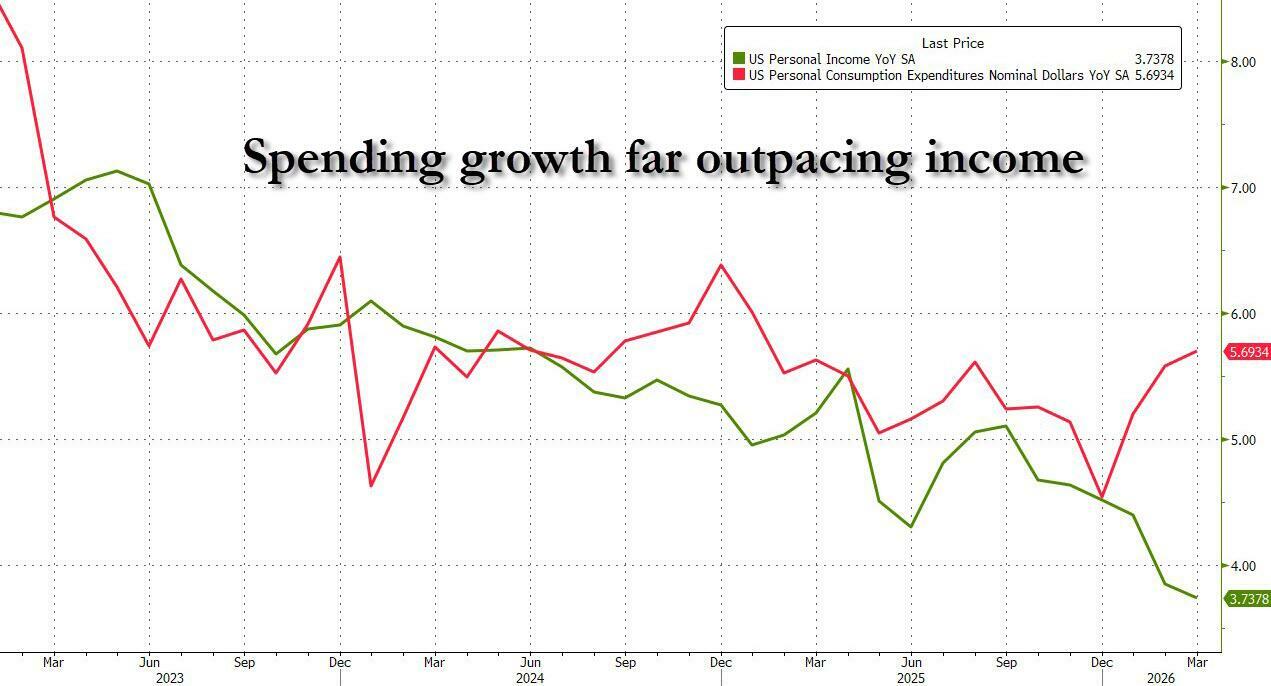
... the personal savings rate has collapsed to a 3-year low.
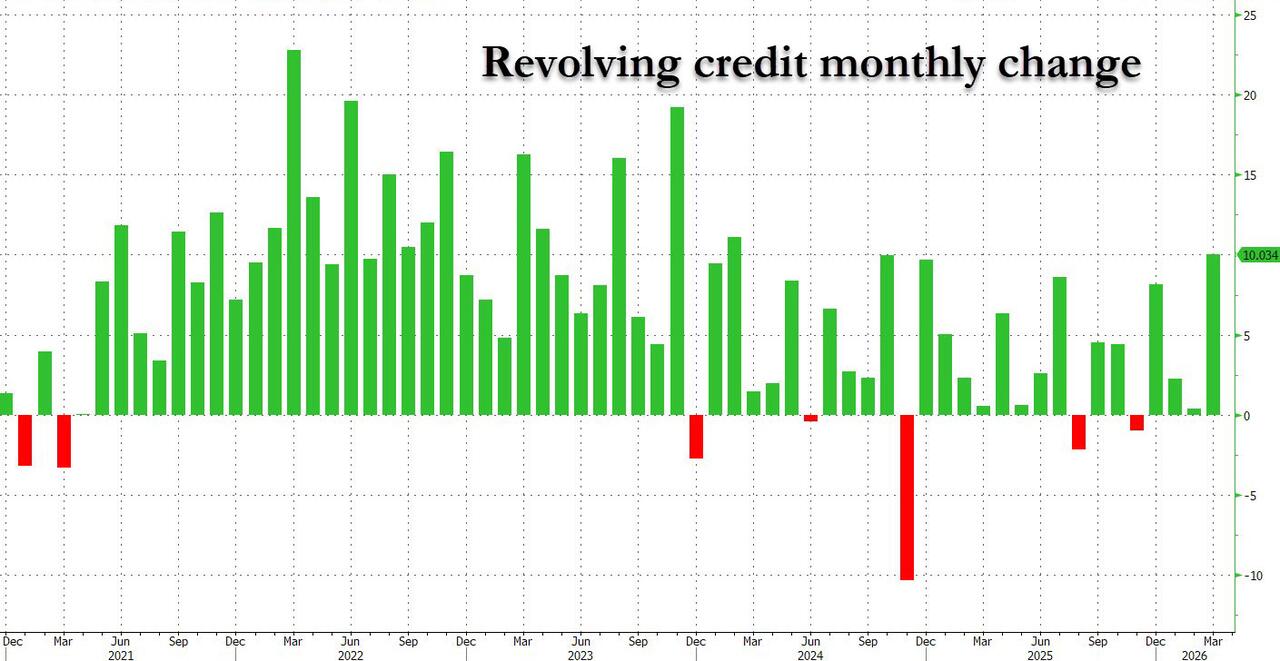
PNC Bank analyst Brian LeBlanc noted, "One of the key reasons the economy has remained so resilient to higher interest rates, elevated inflation, and repeated shocks in recent years is that households have stayed in solid financial shape, allowing consumers to keep spending even as job and income growth has slowed."
"The tax refunds have been largely erased by the increase in Middle East price pressure," said Gregory Daco, chief economist at EY Parthenon, as the FT quoted. "The longer the conflict lasts, the more we move to an adverse scenario where inflation proves more persistent and erodes consumer spending growth."
UBS analyst Mark Paski commented on the FT article in a note titled "Consumer Cracks Beneath the Surface as Markets Push Higher."
Paski wrote:
Consumer discretionary stocks rose 2.3% last week, but the equal-weight consumer discretionary cohort has now broken below its Global Financial Crisis (GFC) lows, having previously held that level — underscoring a widening divergence beneath the surface.
At the same time, NDX logged its 15th all-time high on Friday, while the S&P 500 is now on an eight-week winning streak. At a high level, that backdrop suggests markets are on solid footing — but consumer-linked signals are telling a very different story.
Over the weekend, the FT flagged risks of a potential "fiscal cliff" for consumers in the second half of 2026, as excess cash buffers from refunds begin to fade.
It remains tempting to revisit some of the more washed-out names across the space, which could outperform if key headwinds — including interest rates, crude oil, and inflation sentiment — begin to show signs of peaking. That said, Friday's sharp move in Ross Stores (ROST), up ~8%, does not yet point to a broadening recovery across the group.
More broadly, parts of the consumer complex appear to be approaching a "terminal velocity," with dispersion still pronounced. Retailers are trading better today, but hardlines remain under meaningful pressure.
Recent commentary has not helped sentiment: several companies, including AutoZone (AZO), noted on recent conference calls that quarter-to-date (QTD) trends have shown little improvement versus the prior quarter, alongside headwinds from a colder-than-expected May.
Net, incoming data points and company commentary continue to reinforce the existing narrative, with little to force a shift in short positioning at this stage.
Signs of consumer stress are rising, with delinquencies climbing across credit cards, auto loans, and student loans, while lower-income households remain trapped on the wrong side of the K-shaped economy.
Taken together, the consumer cliff that the FT warns about will likely prompt the Trump team to ramp up its affordability agenda this summer as the midterms come into view.